Devon Fischer · 12 November 2026
Coastal Salt Exposure and Shifts in Crystallization Pressure Within Treated Limestone and Sandstone
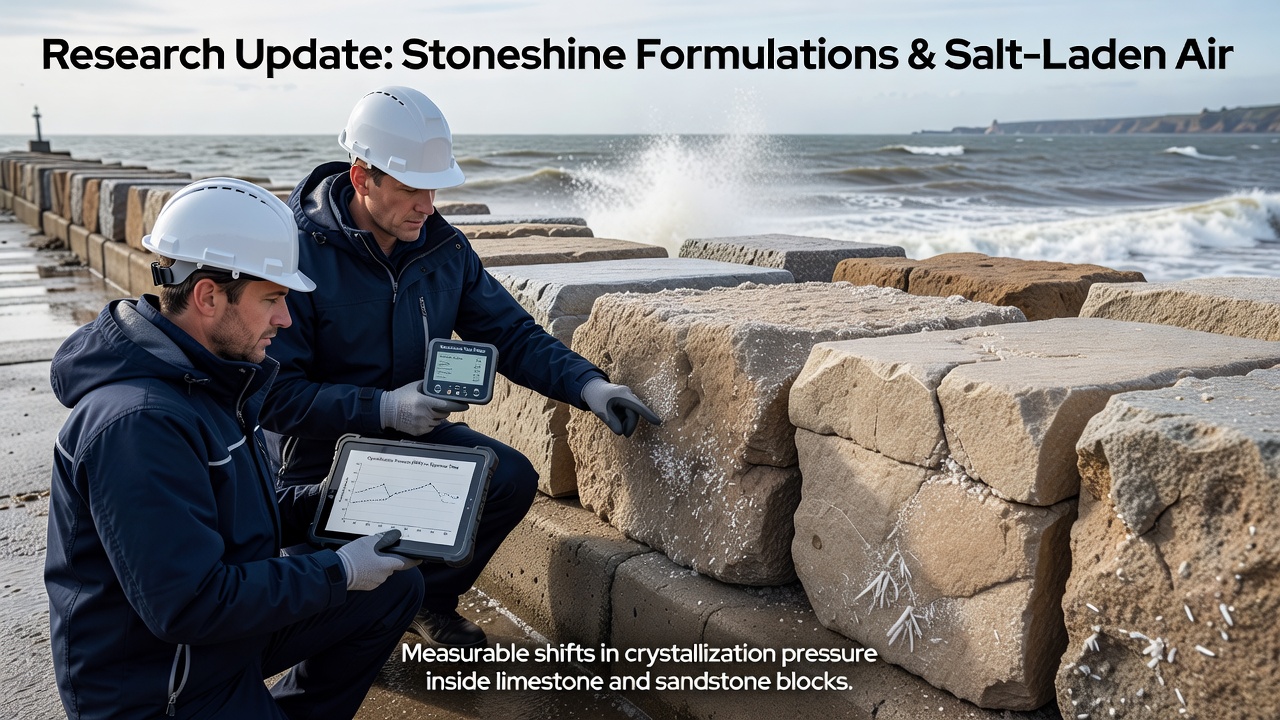
Researchers have tracked how Stoneshine formulations interact with salt-laden air in coastal zones, and this work shows measurable shifts in crystallization pressure inside limestone and sandstone blocks used for seawalls and piers, while the same studies document changes in pore structure and surface integrity over repeated exposure cycles. Data collected from multiple field sites indicate that salt crystals form at varying depths depending on the formulation applied, and these patterns differ between limestone and sandstone because of their distinct porosity levels and mineral compositions.
Salt Crystallization Mechanics in Marine Environments
Coastal air carries fine salt particles that penetrate stone surfaces during high humidity periods, and once moisture evaporates the salts recrystallize inside pores and create internal pressures that can exceed the tensile strength of the material. Studies conducted on seawalls in regions with consistent marine influence reveal that untreated limestone experiences pressure peaks reaching several megapascals during drying phases, whereas sandstone shows slightly lower values due to larger average pore sizes that allow some salt expansion before stress concentrates. Researchers monitoring these processes note that seasonal wind patterns and tidal spray frequency directly influence the rate at which salts accumulate, and blocks positioned closer to the waterline exhibit faster pressure buildup compared with those higher on the structure.
Role of Stoneshine Formulations in Pressure Modification
Stoneshine formulations contain compounds designed to alter surface tension and reduce water absorption rates, and when these treatments meet salt-laden air the resulting film modifies how moisture and dissolved salts move through the stone matrix. Laboratory tests paired with on-site monitoring demonstrate that certain formulations slow initial salt ingress yet permit deeper penetration once the surface layer begins to weather, which in turn shifts the location of maximum crystallization pressure from the outer millimeters to zones several centimeters inward. Observers note that this relocation can delay visible surface damage while increasing stress on internal layers, and the effect appears more pronounced in limestone because its finer pores retain moisture longer than the coarser structure of sandstone.
Field Measurements and Data Collection Methods
Teams deployed strain gauges and pressure sensors directly into core samples extracted from existing piers and seawalls, and continuous logging over multiple months captured daily and seasonal fluctuations tied to temperature, humidity, and wind-driven salt deposition. In November 2026 additional sensor arrays were installed at three new coastal test locations to expand the dataset, and early readings from these sites align with earlier findings that treated blocks experience pressure profile changes within the first six weeks of exposure. Equipment calibration followed standards established by the National Institute of Standards and Technology, which provided reference values for sensor accuracy under high-salinity conditions.
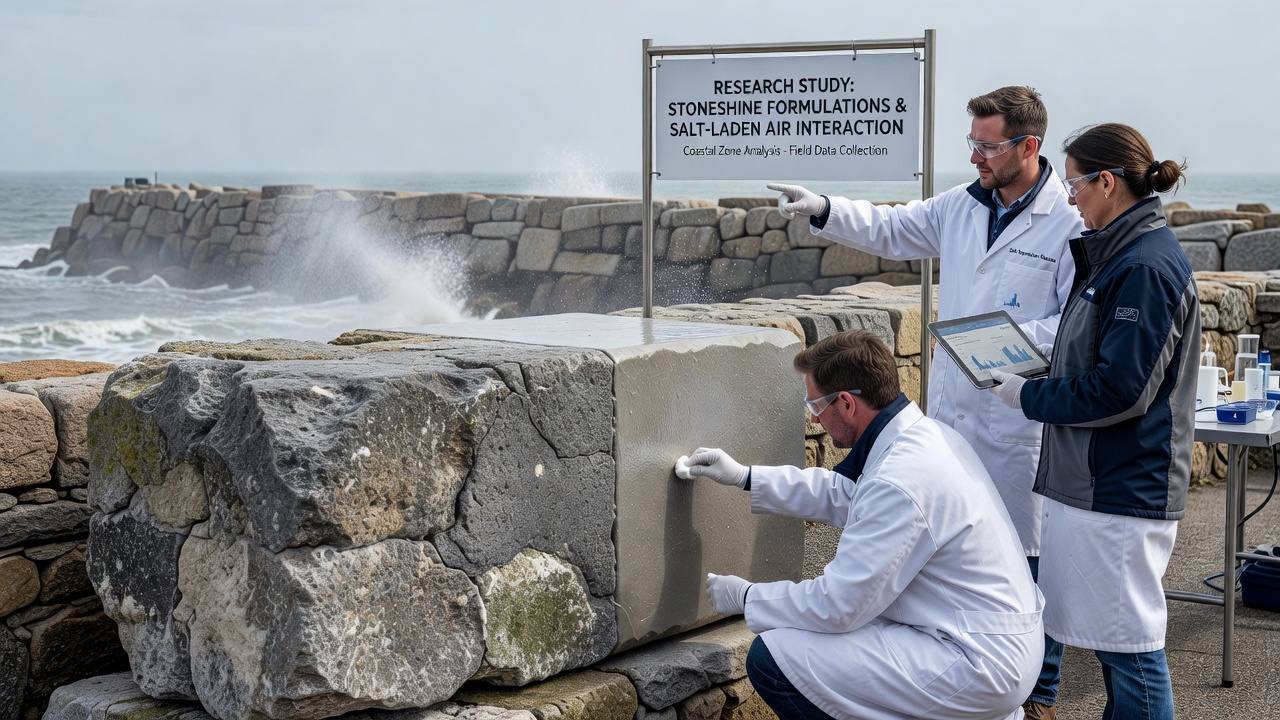
Analysis of core samples under polarized light microscopy further confirmed that salt crystals in treated limestone tend to cluster along bedding planes, while sandstone displays more random distribution that reflects its granular texture. These microscopic patterns correlate with the macroscopic pressure readings, and researchers continue to refine models that predict long-term structural response based on initial formulation application thickness and environmental exposure duration.
Applications to Seawalls and Piers
Seawalls constructed from limestone blocks often serve as primary defenses against wave action, and the added variable of shifted crystallization pressure affects how maintenance schedules are planned because internal stress may reach critical thresholds before external cracking becomes apparent. Piers built with sandstone face similar considerations, although their larger pore networks sometimes accommodate salt expansion with less immediate damage, and formulation adjustments can be tailored to each stone type to moderate pressure peaks. Engineers reviewing these findings incorporate the data into load calculations and select treatment intervals that account for both surface protection and internal pressure management.
Comparative Observations Across Stone Types
Limestone consistently registers higher maximum crystallization pressures than sandstone under identical salt exposure conditions, yet the difference narrows when Stoneshine formulations include additives that reduce capillary rise. Sandstone, by contrast, shows greater variability between samples because grain size distribution influences how evenly salts distribute during drying cycles. Data from paired test blocks placed at the same coastal sites illustrate that formulation performance depends on both stone mineralogy and local spray intensity, and researchers continue to collect samples to build a broader statistical picture.
Conclusion
Continued monitoring of Stoneshine-treated limestone and sandstone in salt-laden coastal settings provides quantitative evidence of altered crystallization pressure profiles, and these measurements support more precise planning for seawall and pier maintenance. Ongoing work scheduled through late 2026 will add further datasets from additional geographic regions, allowing clearer comparisons of formulation behavior across varying climatic and tidal regimes.