Felix Schmitt · 1 October 2026
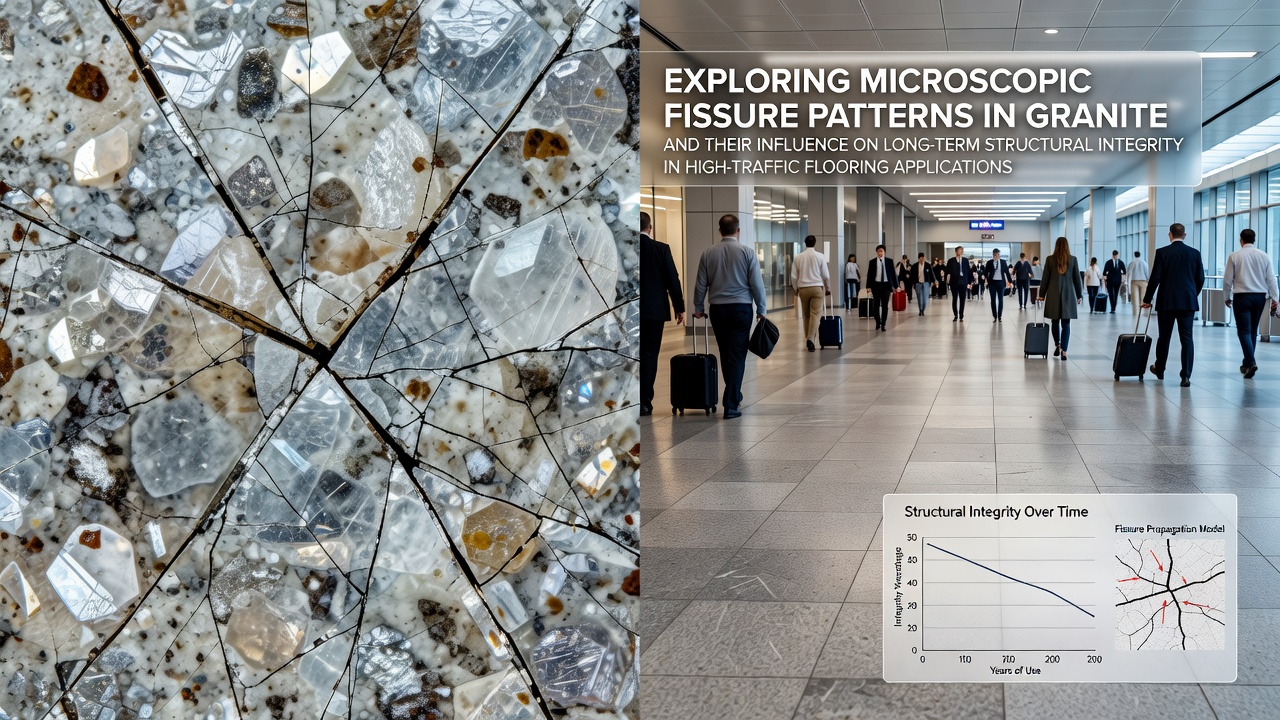
Exploring Microscopic Fissure Patterns in Granite and Their Influence on Long-Term Structural Integrity in High-Traffic Flooring Applications
Granite flooring in high-traffic environments such as airports, shopping centers, and public transit hubs experiences repeated mechanical stress that can interact with internal material features including microscopic fissures, and researchers have mapped these patterns to assess how they evolve over time under load cycles. Studies from multiple regions indicate that fissure networks often form during the cooling phase of magma intrusion, creating networks of aligned microcracks that range from 1 to 50 micrometers in width and extend along mineral grain boundaries between quartz, feldspar, and mica crystals.
Formation Mechanisms and Detection Methods
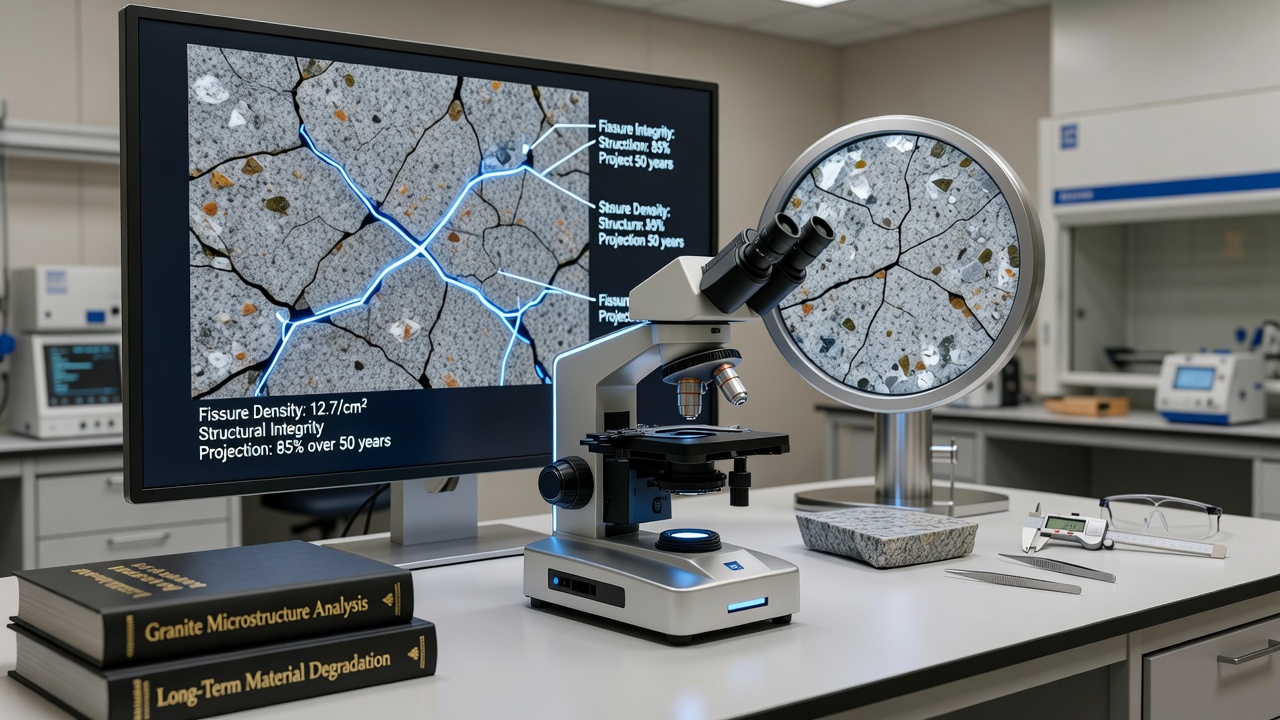
Geologists trace fissure development to thermal contraction and anisotropic expansion coefficients among mineral phases, while subsequent tectonic stresses can widen or connect these voids into more extensive systems. Modern inspection protocols combine scanning electron microscopy with acoustic emission monitoring to capture fissure propagation in real time, and data collected at facilities in Canada and Australia show that fissure density correlates directly with quartz content above 30 percent by volume. Equipment operators apply fluorescent dye penetration followed by ultraviolet imaging to highlight networks that remain invisible under standard light, allowing precise mapping before installation decisions occur.
October 2026 brought updated guidelines from the European Committee for Standardization that recommend routine fissure indexing for granite batches destined for public flooring, and these protocols require at least three core samples per 500 square meters of planned surface area. Laboratories then calculate average fissure length and orientation angles to generate risk scores that predict long-term behavior under pedestrian and vehicular loads.
Influence on Load Distribution and Fatigue Resistance
High-traffic flooring must withstand millions of loading cycles, and microscopic fissures act as stress concentrators that lower the effective tensile strength of granite by 15 to 40 percent according to measurements reported in materials engineering journals. When fissures align parallel to the surface, shear forces from foot traffic or wheeled equipment can extend cracks along cleavage planes, whereas randomly oriented networks tend to distribute stress more evenly and delay macroscopic failure. Field observations at major transit terminals in the United States demonstrate that slabs containing oriented fissure clusters developed visible surface spalling after approximately 2.8 million cycles, while comparable material with isotropic patterns remained intact past 4 million cycles.
Moisture infiltration through open fissures accelerates degradation because water expands upon freezing or carries dissolved salts that crystallize within the voids, and research teams in the United Kingdom documented a 25 percent reduction in flexural strength after 50 freeze-thaw cycles on samples with fissure porosity exceeding 0.8 percent. Maintenance crews therefore monitor relative humidity and apply sealers that penetrate 2 to 3 millimeters to reduce fluid ingress without altering surface friction characteristics.
Case Examples from Operational Sites
One airport terminal in northern Europe replaced original granite flooring after seven years because oriented fissure sets aligned with passenger flow paths had propagated into surface cracks exceeding 3 millimeters wide. Engineers performed post-removal analysis using X-ray computed tomography and confirmed that initial fissure density measured at installation had doubled under cyclic loading from baggage carts and cleaning equipment. In contrast, a shopping complex in Melbourne retained its granite surfaces for over 15 years after selecting slabs screened for random fissure orientation and treated with topical consolidants that filled voids to a depth of 1 millimeter.
Industry reports from the Natural Stone Institute in the United States note that specifying granite with fissure indices below 12 cracks per square centimeter reduces replacement frequency in corridors handling more than 10,000 daily passages. Suppliers now provide digital fissure maps alongside traditional physical samples so architects can model expected performance using finite element analysis before final material selection.
Standards and Ongoing Research Directions
Current building codes in several jurisdictions require documentation of microscopic fissure characteristics for stone used in public assembly areas, and testing laboratories follow procedures outlined by the American Society for Testing and Materials to quantify parameters such as fissure aspect ratio and connectivity index. Ongoing projects at research centers in Japan and South Africa explore laser-induced surface modification techniques that can seal fissure openings at the micron scale without changing visible texture or slip resistance values.
These methods combine pulsed laser energy with real-time optical feedback to melt thin mineral layers over fissure mouths, and preliminary results indicate a 60 percent reduction in water absorption rates after treatment. As sensor technology improves, embedded acoustic arrays may soon allow continuous monitoring of fissure growth within installed floors, providing early warnings before visible damage appears.
Conclusion
Long-term structural integrity of granite flooring in high-traffic settings depends on understanding and accounting for microscopic fissure patterns that originate during rock formation and evolve under mechanical adn environmental loads. Systematic detection, orientation analysis, and targeted mitigation strategies enable specifiers to select materials that maintain performance across decades of service. Continued refinement of non-destructive evaluation methods and treatment technologies supports more reliable predictions and extends service life while preserving the aesthetic and functional qualities of granite surfaces.