Felix Frank · 3 September 2026
Seasonal Demand Shifts and Their Effect on Technical SEO Priorities for Natural Stone Suppliers
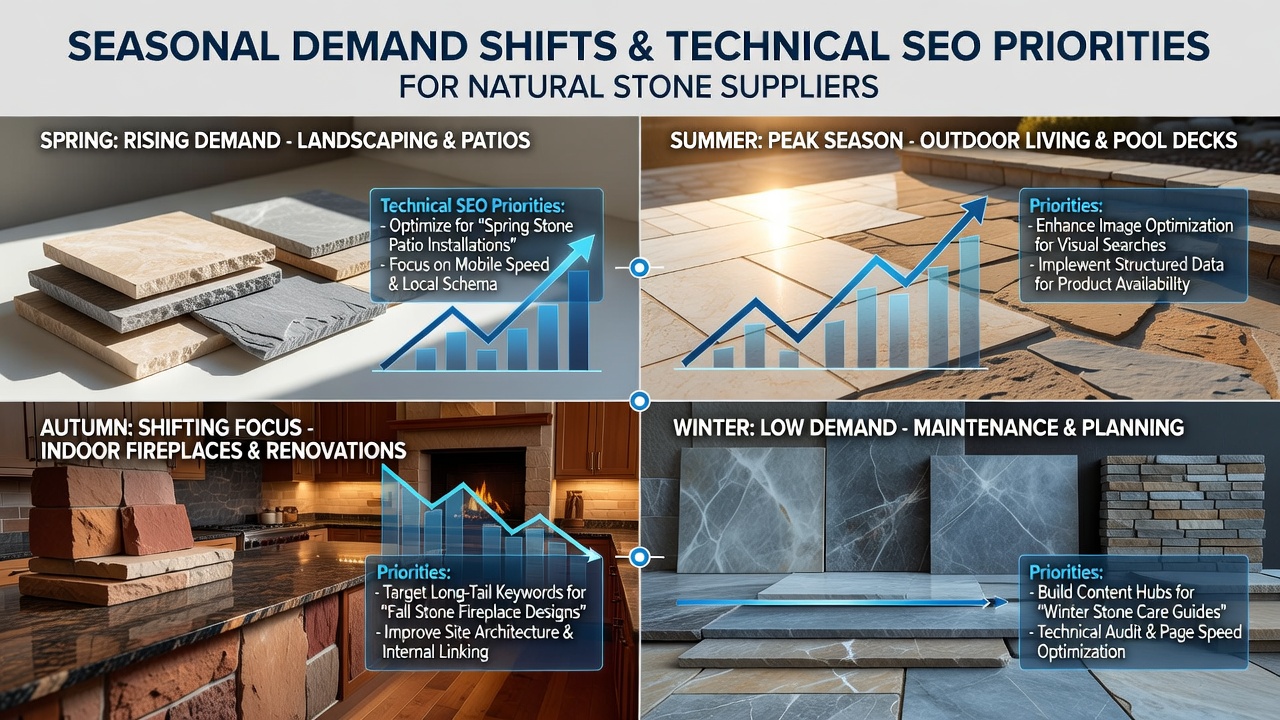
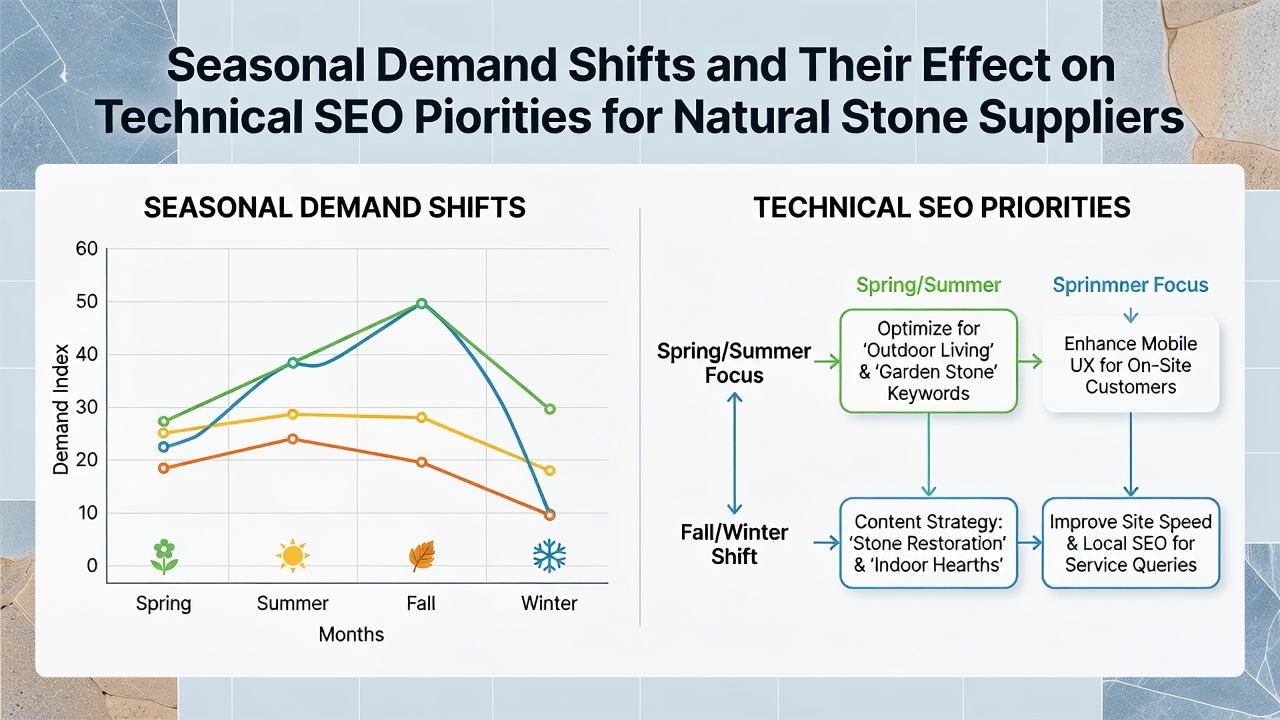
Natural stone suppliers face predictable fluctuations in demand that align with construction cycles, home renovation trends, and weather patterns across regions, and these shifts directly influence the technical SEO priorities that determine how search engines crawl, index, and rank supplier websites. Spring and summer typically bring increased activity in residential and commercial building projects, which drives higher search volumes for terms related to marble, granite, limestone, and slate products, while fall sees a transition toward indoor applications and winter often registers lower overall queries as outdoor work slows.
Documented Demand Patterns Across Markets
Data from government statistical agencies shows construction spending peaks between March and August in North America, with similar patterns reported by Eurostat for building permits in the European Union where activity intensifies before colder months arrive, and these cycles create corresponding spikes in online searches for natural stone materials used in flooring, countertops, and facades. Suppliers who monitor these trends through analytics tools observe that product pages for exterior paving and cladding receive more impressions during warmer quarters, whereas interior-focused content gains traction as temperatures drop. In September 2026, industry reports are expected to highlight how post-summer inventory adjustments will affect search demand for remaining stock, prompting suppliers to update availability signals on their sites ahead of the next cycle.
Search Volume and Keyword Prioritization Changes
Technical SEO teams at stone suppliers adjust keyword targeting when seasonal searches shift, because terms such as "outdoor granite tiles for summer projects" rise in the warmer months while "heated flooring stone options" climb during fall and winter, and search console data reveals that failing to update meta titles and headings to match these movements leads to missed impressions. Crawl budget allocation becomes critical when new product uploads coincide with peak seasons, since search engines prioritize fresh content that matches current user intent, and suppliers who implement proper XML sitemaps with lastmod dates updated in real time maintain better indexation rates. Page speed optimizations gain urgency when traffic increases, because slower load times during high-demand periods cause higher bounce rates and reduced rankings for competitive stone-related queries.
Site Architecture and Structured Data Adjustments
Suppliers restructure internal linking and schema markup to reflect seasonal priorities, adding product schema with availability and price indicators that update automatically when inventory moves quickly in spring, and this structured data helps search engines surface relevant listings in rich results during periods of elevated demand. Mobile optimization receives heightened attention because field searches for local stone suppliers often occur on job sites via smartphones, and sites that maintain core web vitals scores under 2.5 seconds for largest contentful paint retain visibility advantages when users compare multiple vendors quickly. During slower winter months, technical teams redirect focus toward server log analysis to identify under-crawled pages, then consolidate thin content so that crawl budget concentrates on high-value category pages rather than scattered seasonal archives.
International and Regional Variations
Suppliers operating across multiple climates must account for staggered seasons, because demand in southern regions may remain steady while northern markets experience sharp drops, and hreflang implementations combined with geo-targeted sitemaps ensure search engines serve the correct regional pages without diluting authority. According to the US Census Bureau, monthly construction spending reports provide leading indicators that suppliers use to forecast technical SEO workload, while Canadian data from Statistics Canada on building permits offers comparable signals for North American operations. European suppliers reference Eurostat releases on housing completions to time schema updates and image optimization campaigns ahead of each seasonal transition.
Technical Infrastructure Scaling
Hosting and CDN configurations require seasonal reviews because traffic surges during peak demand can strain server resources, leading to increased downtime that harms both user experience and crawl frequency, and suppliers who implement auto-scaling solutions maintain consistent performance metrics reported in search console. Image optimization becomes a repeated priority since natural stone product photography files are often large, and lazy loading combined with next-gen formats like WebP ensures faster delivery when users browse extensive catalogs during high-intent periods. Log file analysis conducted quarterly helps identify whether seasonal content additions have inadvertently created duplicate pathways that waste crawl budget, allowing teams to implement canonical tags before the next demand upswing.
Conclusion
Seasonal demand shifts compel natural stone suppliers to treat technical SEO as a dynamic process rather than a static checklist, with priorities rotating between speed and freshness during peaks and consolidation plus infrastructure audits during lulls, and organizations that align their technical roadmaps with construction calendars achieve steadier search visibility throughout the year. Continuous monitoring of analytics and search console trends, informed by official statistical releases, enables precise timing of updates so that site performance matches the rhythm of market activity.